15 Common Mistakes First-Time Homebuyers Make
Buying your first home is an exciting milestone, but it can also be overwhelming. From choosing the right location to understanding your finances, there are many decisions that can affect your home-buying experience. Avoiding common first-time homebuyer mistakes can help you save money, reduce stress, and make a more confident investment.
Here are 15 mistakes every first-time homebuyer should know about.
1. Not Setting a Realistic Budget
One of the most common mistakes is focusing only on the property’s purchase price. Buyers should also consider registration costs, taxes, maintenance, insurance, repairs, and other expenses before deciding what they can afford.

2. Skipping Mortgage Pre-Approval
Getting pre-approved for a home loan can help you understand your borrowing capacity. Shopping for properties without knowing your budget can lead to unrealistic expectations.

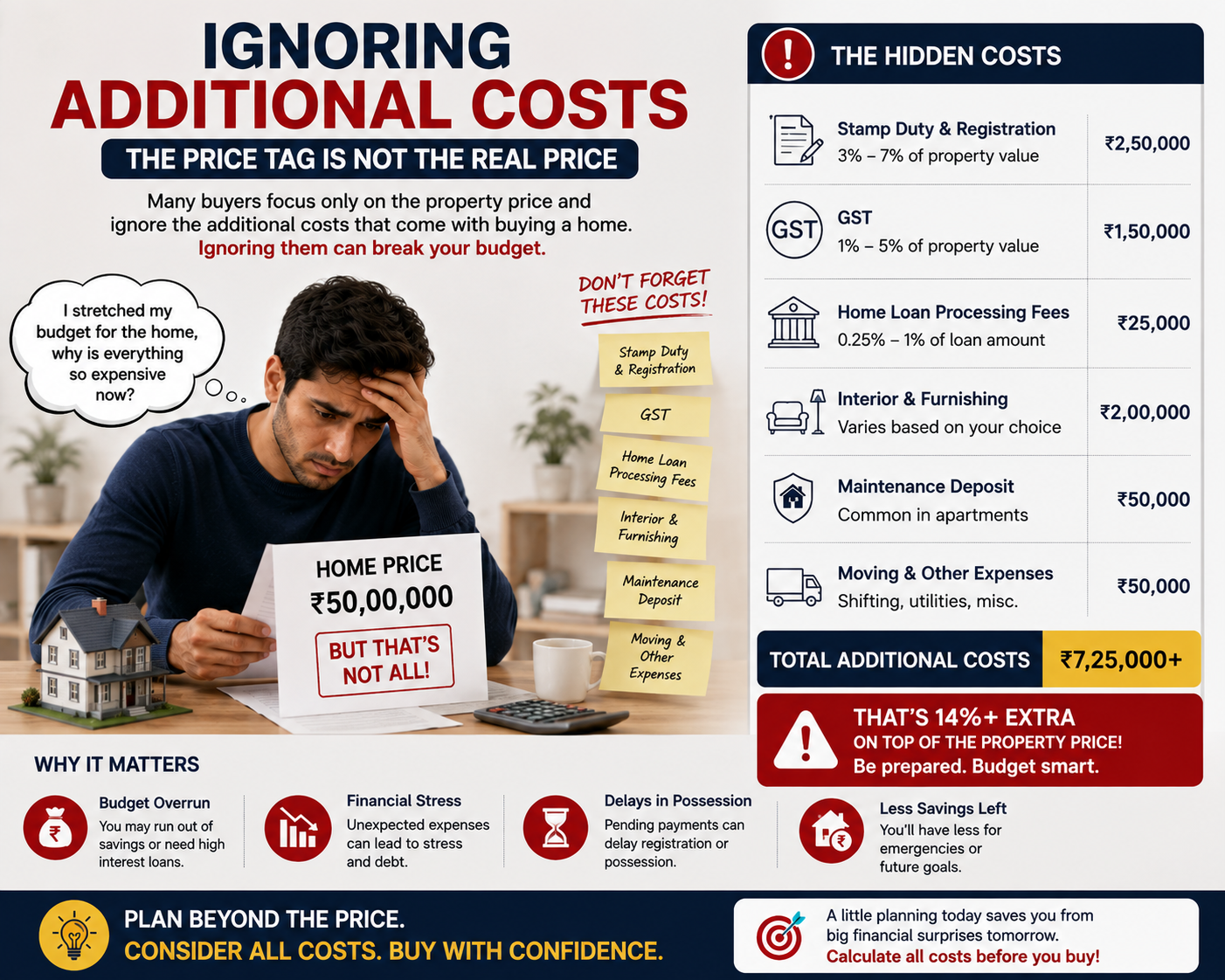
3. Ignoring Additional Costs
The down payment is not the only expense. Legal fees, closing costs, moving expenses, brokerage charges, and property-related taxes can significantly increase the total cost.
4. Choosing a Property Based Only on Price
A low-priced property may not always be a good investment. Consider location, construction quality, amenities, connectivity, future development, and resale potential before making a decision.
5. Not Researching the Location
Location plays a major role in both lifestyle and property value. Research schools, hospitals, transportation, employment hubs, shopping areas, and planned infrastructure projects.
6. Skipping Property Inspection
Never assume that a property is in perfect condition. Check for structural problems, plumbing issues, electrical faults, dampness, and other potential repair costs.
7. Failing to Verify Property Documents
Buyers should carefully verify ownership documents, approvals, title records, and other relevant paperwork. Professional legal advice can help identify potential issues before purchase.
8. Not Comparing Home Loans
The first loan offer you receive may not be the best one. Compare interest rates, processing fees, repayment terms, and other charges from different lenders.

9. Spending Your Entire Savings
Using almost all your savings for a home purchase can leave you financially vulnerable. Maintain an emergency fund for unexpected expenses and future needs.
10. Getting Emotionally Attached Too Quickly
A beautiful house can make it tempting to overlook practical concerns. Try to evaluate the property objectively and compare it with other options before making an offer.
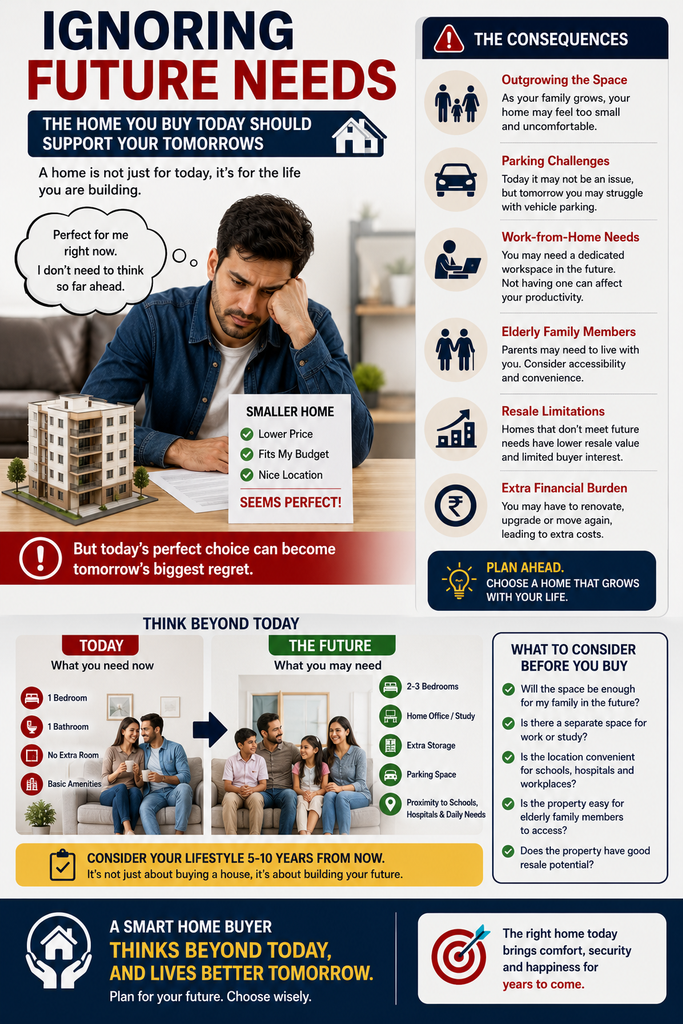
11. Ignoring Future Needs
Think beyond your current lifestyle. Consider family plans, work changes, commuting requirements, storage, parking, and other long-term needs.
12. Not Negotiating
Many first-time buyers hesitate to negotiate. Depending on the market and property, there may be room to negotiate the price or certain terms of the transaction.
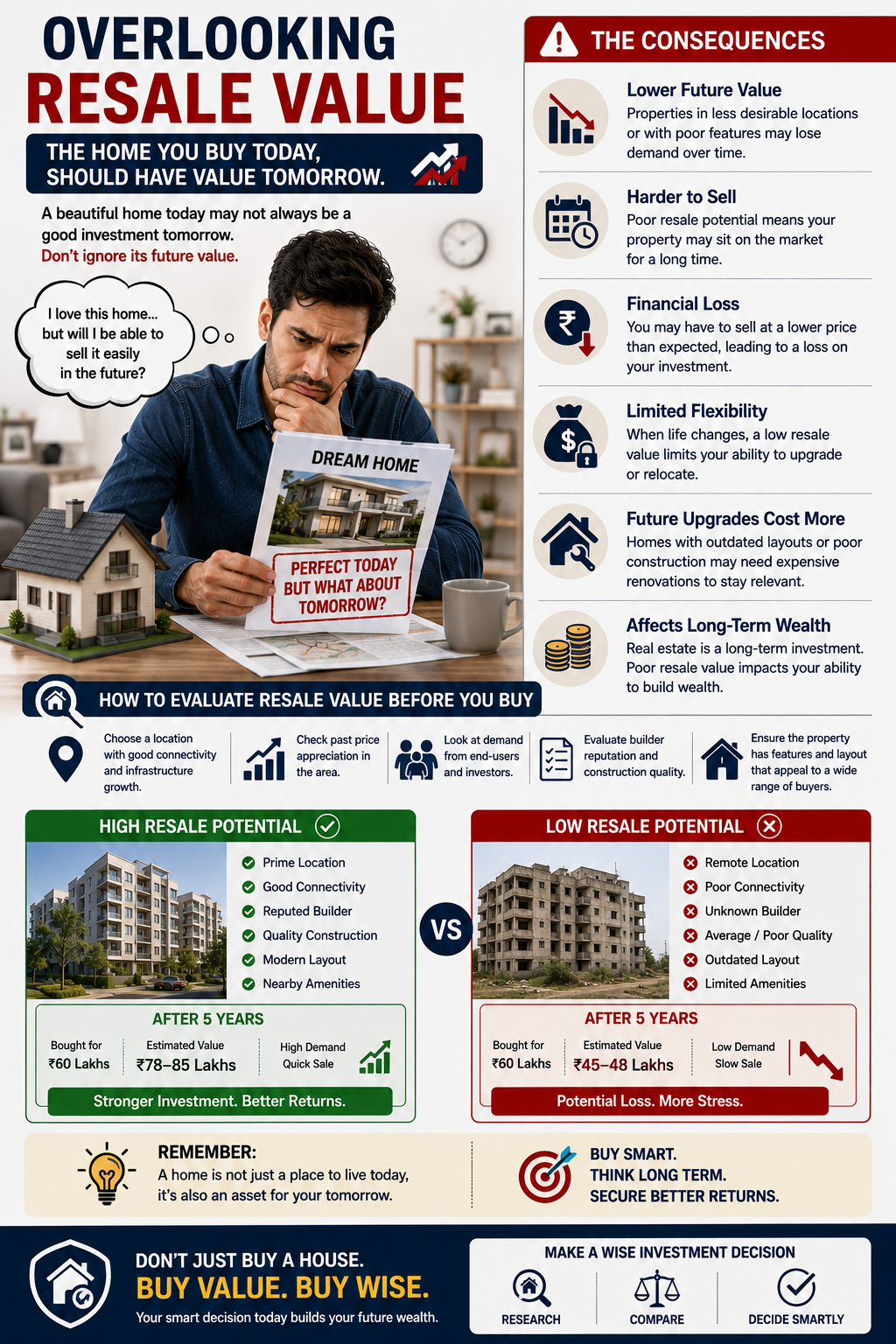
13. Overlooking Resale Value
Even if you plan to live in the property for many years, circumstances can change. A property in a desirable location with good connectivity and demand may offer better resale potential.
14. Rushing the Decision
Buying a home is a major financial commitment. Avoid making a decision simply because you fear losing a property. Take time to research, compare options, and review the paperwork.
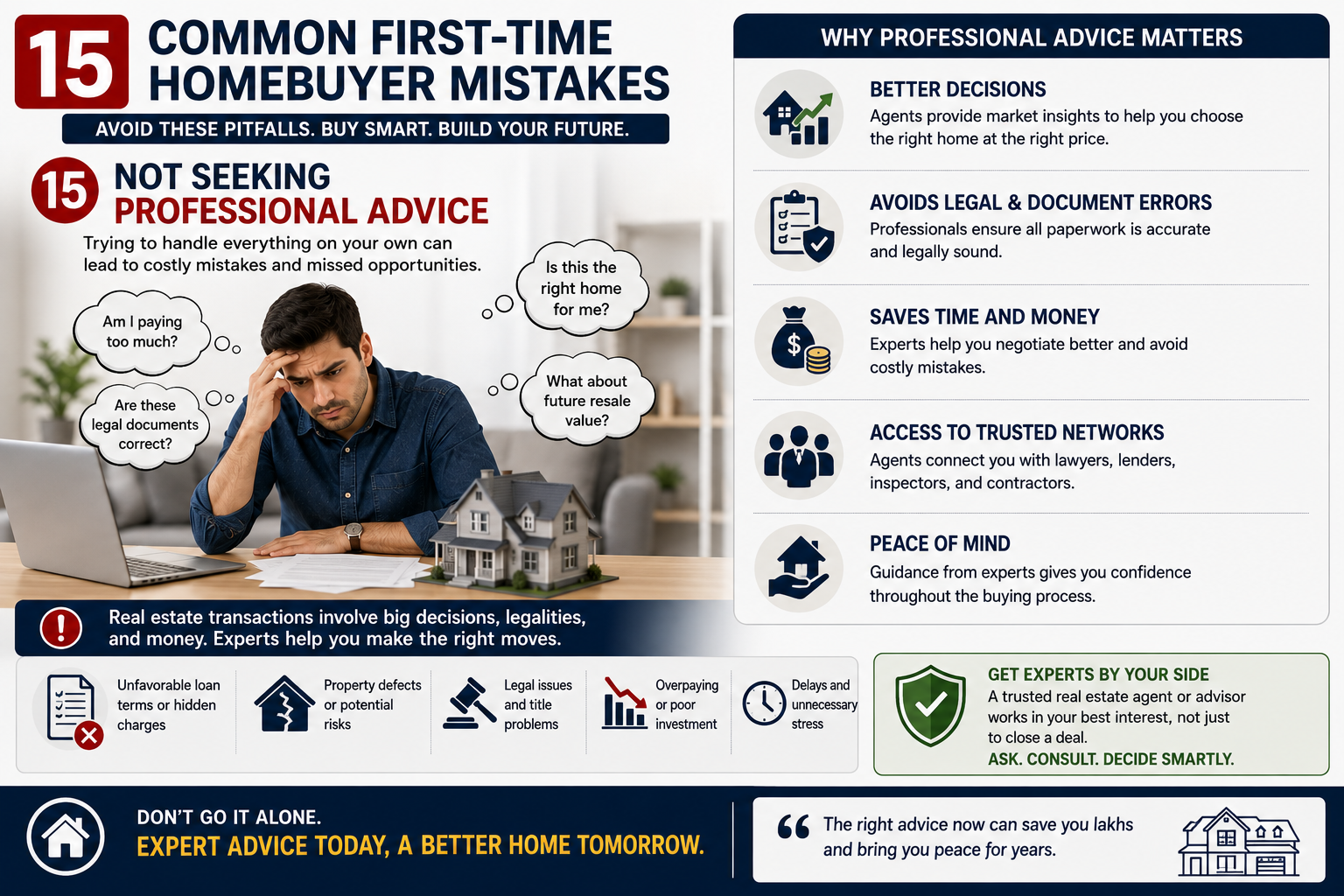
15. Not Seeking Professional Advice
Real estate agents, mortgage professionals, property inspectors, and legal advisors can provide valuable guidance. Professional advice can help first-time buyers identify risks and make informed decisions.
Conclusion
Buying your first home doesn’t have to be stressful. By creating a realistic budget, researching the location, checking property documents, comparing financing options, and thinking about your long-term needs, you can avoid many common first-time homebuyer mistakes.
The key is to research before you commit. A well-informed decision today can help you enjoy your new home while protecting your finances for years to come.